
A green roof, a dark statue, a brown edge on a fitting: it is easy to read them as “old”. But copper carries no calendar on its surface. What we see results from reactions between metal and surroundings. A more revealing question is therefore: what history lies within the layer — and what does its colour leave unresolved?
The surface is not just copper
Natural patination forms copper compounds at the surface. The Copper Development Association describes basic copper sulfates as important colouring components of green patina; carbonate and chloride compounds may also contribute. Chlorides can be particularly significant near the coast. The green material is therefore not one substance that every copper surface produces in the same way. Its composition already reflects contact with particular surroundings. This is a chemical alteration of the material, rather than simply a dusty coating over unchanged metal. [1]
Time acts through conditions
A surface does not turn green solely because enough years have passed. Moisture, atmospheric substances and exposure affect which reactions are possible and which products remain. The industry association explicitly describes different outcomes depending on climate and environment; some conditions do not produce the expected green surface. A universal schedule assigning a particular shade to a particular number of years is therefore unreliable. Surfaces of similar age may look different, while similarly green surfaces may have different histories. [1]
A surface becomes a history of reactions.
An imagined section through patinated copper and three perspectives on its change. Colours and layer thicknesses are schematic; the cards distinguish formation and possible conditions.
- Formation
Metal reacts
Copper compounds form through reactions with the surroundings. Patina is more than deposited dirt. [1]
- Possible condition
A coherent layer
Adherent patina can be stable and protect the surface beneath it. Green colour alone does not establish this. [2]
- Another condition
Continuing corrosion
New loose powder or flaking products can indicate active material loss. A photograph cannot replace examination. [2]
The outer layer contains products of the metal’s reactions. Its composition and condition depend on the environment. Green surfaces can contain different compounds and represent different states. [1] [2]
A documented example: the Statue of Liberty
The National Park Service describes the Statue of Liberty’s copper skin as more brown when it was completed in 1886. Its account says the green patina developed over roughly three decades. This makes change tangible on a familiar object. It does not establish a thirty-year rule for roofs, coins or sculptures. Our opening image neither shows the Statue of Liberty nor reconstructs its colour change. The institutional source documents the real example; the illustration offers an artistic entry into the subject. [3]
A reaction can slow further attack
Corrosion and protection are not automatically opposites when discussing patina. A reaction of the metal can produce a coherent, adherent layer that limits further interaction with its surroundings. The Canadian Conservation Institute describes stable surfaces of this kind. Stable does not mean that an object exists outside time and environment. It distinguishes a condition from continuing material loss. The protective performance of a particular object cannot be established from an attractive green colour alone. [2]
Green copper can have different conditions
For copper and copper alloys, the institute describes stable patinas in several colours, including red, brown, black, blue and green. Active corrosion can instead appear as rapidly developing light-green powder or a loosely adhering layer. Coherence, adhesion and change over time matter here. Roughness alone is not proof of active corrosion: stable archaeological surfaces may also be uneven. The specialist source supplies features to distinguish, rather than a simple colour chart for diagnosing an object at a distance. [2]
Design can create traces too
Patinas need not result exclusively from prolonged weathering. The Canadian Conservation Institute also describes artificially patinated sculptures, medals and other metal objects. The industry association discusses artificial processes and their variable results too. A green surface therefore does not reliably date either an object or its last treatment. Material, manufacture, previous interventions and documented locations would all matter to a historical interpretation. The effect of an image and the documented history of an object are different kinds of information. [1] [2]
What a photograph can answer
A photograph records colour boundaries, sheen, visible texture and its own date. It does not measure a layer’s chemical composition or strength. An observation series benefits from the same framing, comparable light and a date note. A different shadow should not quietly become a supposed new corrosion zone. Assessing a valuable object or component requires further investigation. Looking carefully begins a question; it does not yet provide the complete answer.
Time becomes visible as a relationship
Perhaps a closer look leaves us with a different habit: no longer equating green immediately with age. Copper surfaces reveal material, surroundings and use working together. Some layers remain coherent; others continue changing, and different conditions meet across a single surface. We need not explain every difference immediately to notice it more precisely. The surface tells a story of change. How reliably we read that story depends on distinguishing an observation from the interpretation we give it.
What does this trace reveal?
Look at the images and choose the statement each can support. The explanation also identifies what needs further observation.
All four images are artistic AI illustrations, not documented material samples. This activity practises asking questions; it does not diagnose damage.
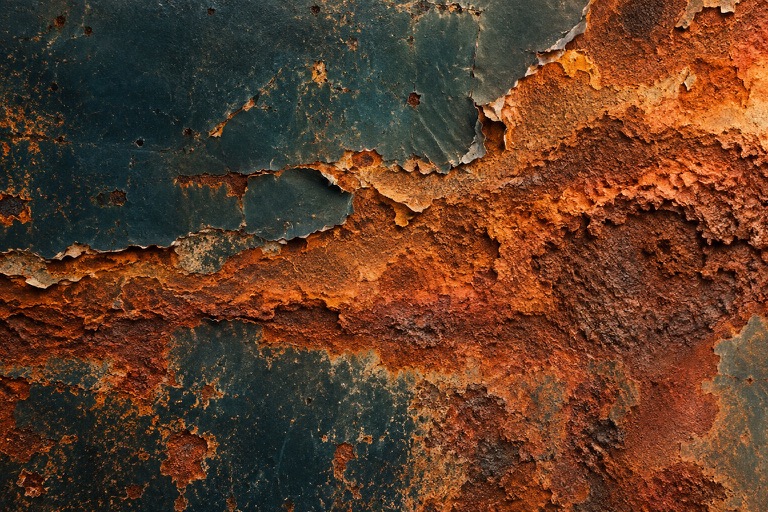 AI ILLUSTRATION
Rust
Which statement is appropriate?
Read the explanation
Colour alone cannot date an object or measure material loss. Material, change over time and examination would matter.
Read the story and its sources →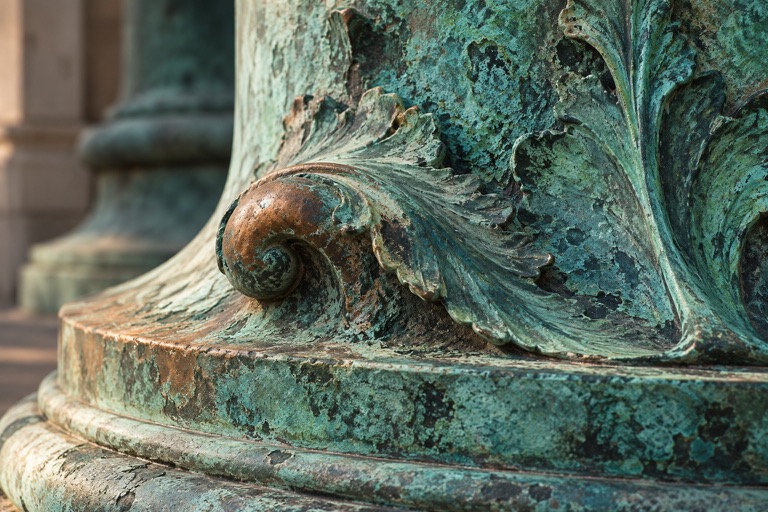 AI ILLUSTRATION
Patina
What can green alone establish?
Read the explanation
Composition, adhesion and change also matter. Green layers can represent different conditions.
Read the story and its sources →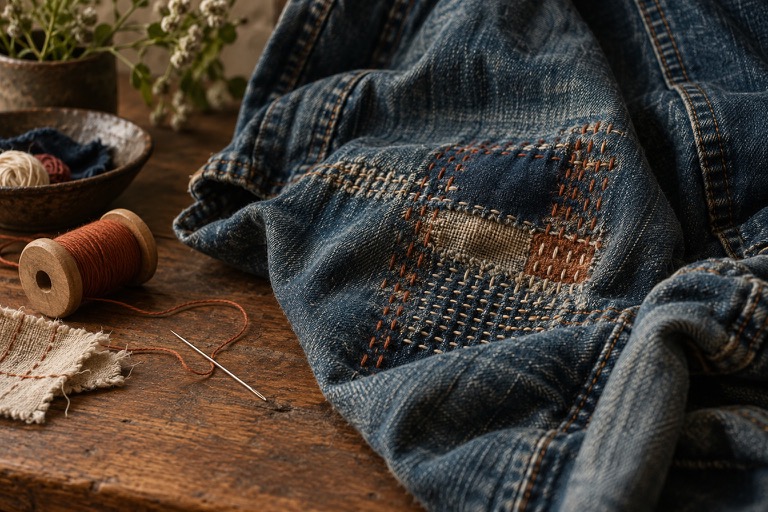 AI ILLUSTRATION
Repair
What does the visible seam tell us?
Read the explanation
Use, material and actual service life remain additional questions. The illustration is not before-and-after evidence.
Read the story and its sources →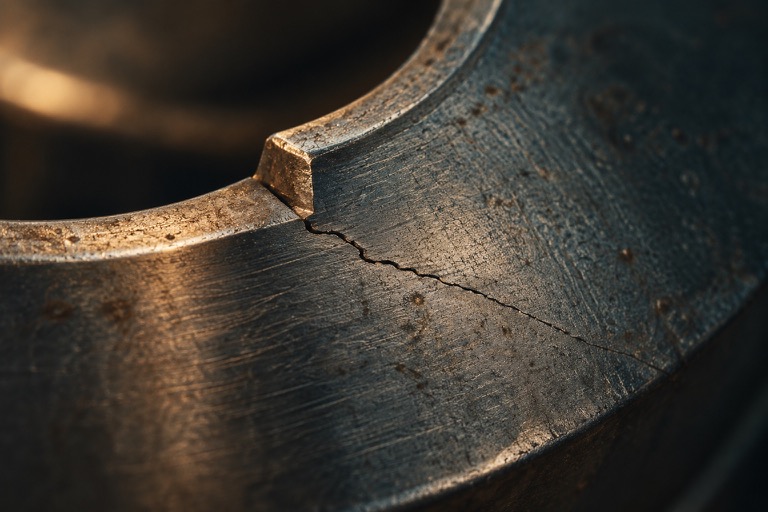 AI ILLUSTRATION
Crack
What does a single crack image fail to establish?
Read the explanation
Repeated loading and examination of the particular object matter for fatigue. Crack shape alone cannot replace them.
Read the story and its sources →Everything runs in your browser. Your inputs are neither stored nor transmitted.
An artistic depiction of a patinated surface, not a documented sample or condition assessment. The imagined section is not to scale. The image cannot establish age, composition or protective performance.
Copper Development Association · Green Patina Finishes ↗
Industry technical information: natural copper patina commonly contains basic copper sulfates, with carbonate and chloride compounds depending on the environment. Climate affects development. Used for these principles; the page’s artificial-patination recipes are not reproduced.
Canadian Conservation Institute · Recognizing Active Corrosion, CCI Notes 9/1 ↗
Conservation guidance revised 2007: coherent, adherent patina may be stable; loose, powdery, newly forming products may indicate active corrosion. Copper and copper alloys are addressed specifically. Does not diagnose the condition shown in our artistic image.
National Park Service · Statue of Liberty: Frequently Asked Questions ↗
Institutional account of the Statue of Liberty: copper skin, initially brown in 1886, natural green patina developing over roughly three decades. An object-specific account, not a universal timetable for copper surfaces.
Sources checked on 24 October 2026. Industry information, conservation guidance and a historical object example serve different roles; their limits are explained individually.