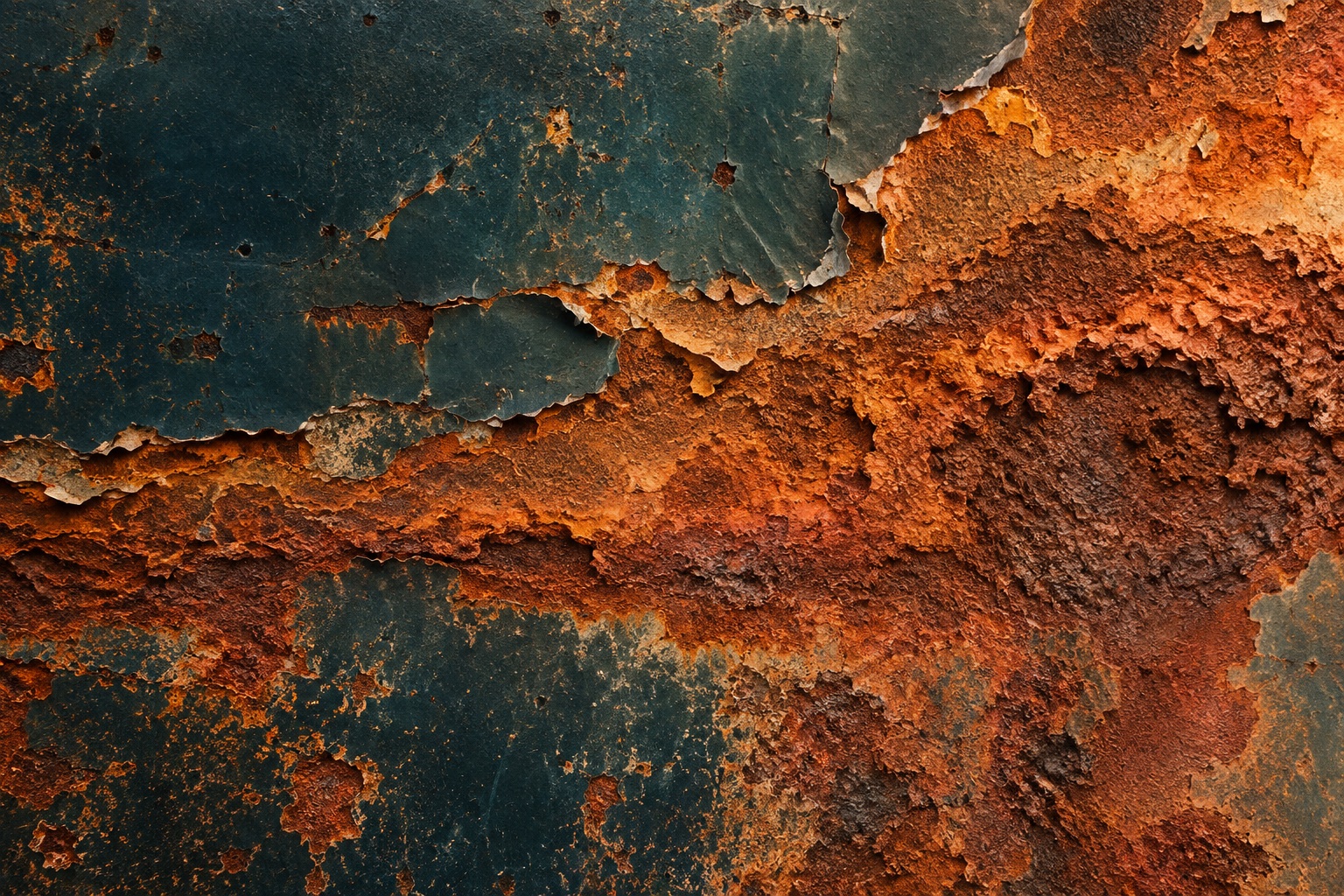
Dark paint loosens on a garden gate. A warm reddish patch appears beneath it. We recognise the gate while also seeing that it has changed. Colour reveals an alteration. Understanding its history, however, requires moving from the visible surface to the conditions behind it.
The question can be broken down
The Royal Society of Chemistry introduces a classroom investigation comparing iron nails under different conditions: wet, dry, air-free and salty. Even its public introduction demonstrates a useful approach. Rather than asking only whether metal rusts, we can investigate the conditions involved. We do not reproduce the registration-restricted teaching content here. For the explanation of the reactions, we use the openly accessible OpenStax university textbook. Different sources perform distinct roles in building the account. [1] [2]
More than one substance meeting another
OpenStax explains rust formation as an electrochemical process involving iron, water and oxygen. At parts of the metal surface, iron atoms release electrons; elsewhere, a coupled oxygen-reduction reaction occurs. These processes belong together. Moisture on the surface is therefore not merely background scenery. Looking at the reddish deposit means seeing a later outcome of an interaction whose individual reaction sites cannot be separated by the unaided eye. The apparently simple stain records more than its colour suggests. [2]
What happens behind a patch of rust.
A simplified explanation of iron corrosion in moist, oxygen-containing surroundings. It shows interacting processes, not a measured sequence in the image.
- Oxidation
Iron releases electrons
At parts of the metal surface, iron atoms become dissolved iron ions. Electrons are transferred through the metal. [2]
- Coupled reaction
Oxygen accepts electrons
A corresponding oxygen-reduction reaction occurs in the moist environment. Oxidation and reduction are linked. [2]
- Visible trace
Corrosion products form
Further reactions produce hydrated iron compounds. The visible layer is an outcome, not a built-in clock. [2]
Our editorial explanation based on OpenStax. Real surfaces contain different reaction sites and products; the diagram establishes no corrosion rate or remaining service life. [2]
Rust is more than a shade
Further reactions of iron compounds in moist air produce hydrated corrosion products. The textbook expresses their variable composition through a changing water content. We need not memorise a chemical formula to recognise the important point: rust-coloured describes a perception rather than a complete analysis. Two similarly red surfaces may have different thicknesses, adhesion and histories. Even identifying a particular visible product requires more than an aesthetic judgement about colour. A name for an appearance is not the same thing as a measurement. [2]
Why the scratch belongs to the story
OpenStax also illustrates iron corrosion at a damaged coating. An intact paint layer can limit contact between metal and the surrounding conditions needed for rust formation. A break in that layer changes the situation. An apparently small scratch is therefore more than a line in the paint: it can become a place where metal meets its surroundings differently. This establishes no fixed deadline for damage. Material, coating and the wider environment remain part of the question. [2]
Old surfaces can differ in stability
Rust should not automatically be treated as reliable protection: in the general textbook example, it flakes away and exposes more iron. Conservation adds an important distinction. The Canadian Conservation Institute describes compact, firmly adhering and stable iron surfaces too. Active corrosion may instead involve loose products or continuing changes. These accounts do not contradict each other. They address different conditions. Already corroded does not necessarily mean currently deteriorating rapidly, just as an attractive surface does not establish stability. [2] [3]
The years are not written in the red
How old is the gate? Its patch of rust cannot reliably answer that question. A surface protected for many years and one exposed for less time under unfavourable conditions have different histories. Nor does the visible red tell us how much load-bearing metal remains beneath it. Our illustration is therefore neither an age estimate nor a condition assessment. Time belongs to the story, but cannot explain the process without information about the environment and the surface itself.
Comparison makes change more tangible
A useful comparison records the same area, a date, viewpoint and reasonably similar lighting. A flaking edge or newly noticed loose particles may prompt further questions. CCI discusses such signs in the context of museum objects; it does not authorise assessing arbitrary components from photographs. An actual condition assessment requires appropriate information about material and use. For our observation, the first useful step is to distinguish a carefully recorded trace from the explanation proposed for it. [3]
See beauty and material change together
We can appreciate a rusty surface’s colours without treating them as harmless decoration. Aesthetic effect and chemical alteration answer different questions. A closer look takes both seriously: the surface that attracts attention, and the process that produces it. In our language, the gate remains the same gate. Its familiar appearance nevertheless results from continuing encounters between material and environment. That is precisely where its story of change can be found.
What does this trace reveal?
Look at the images and choose the statement each can support. The explanation also identifies what needs further observation.
All four images are artistic AI illustrations, not documented material samples. This activity practises asking questions; it does not diagnose damage.
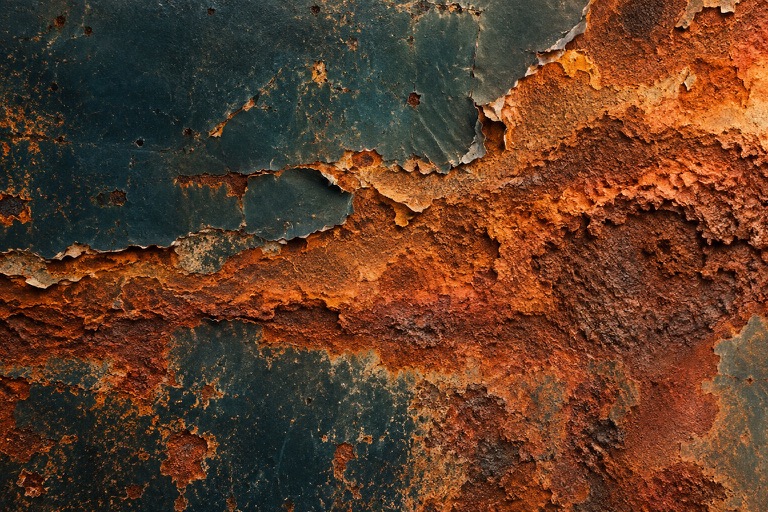 AI ILLUSTRATION
Rust
Which statement is appropriate?
Read the explanation
Colour alone cannot date an object or measure material loss. Material, change over time and examination would matter.
Read the story and its sources →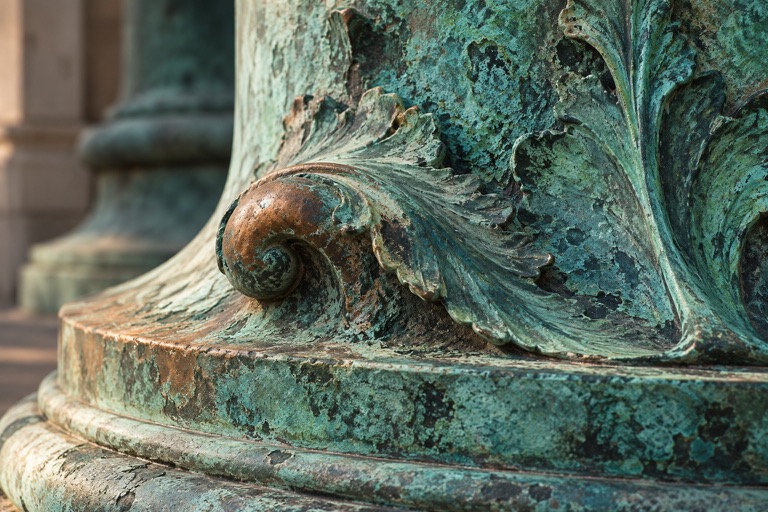 AI ILLUSTRATION
Patina
What can green alone establish?
Read the explanation
Composition, adhesion and change also matter. Green layers can represent different conditions.
Read the story and its sources →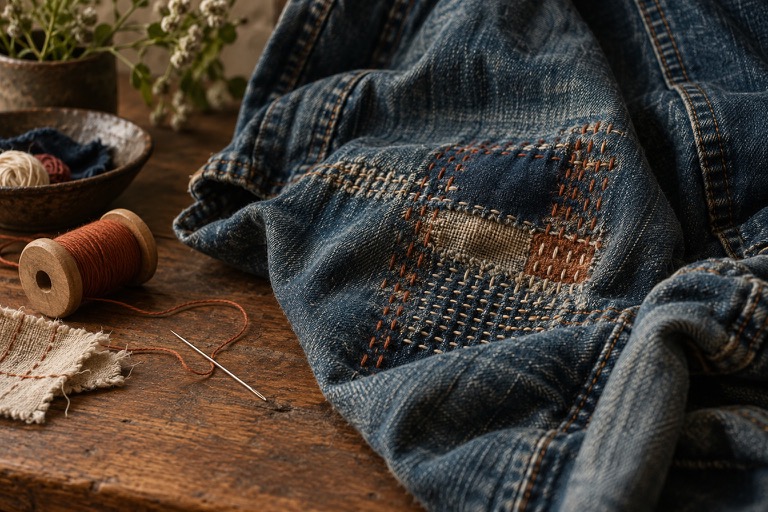 AI ILLUSTRATION
Repair
What does the visible seam tell us?
Read the explanation
Use, material and actual service life remain additional questions. The illustration is not before-and-after evidence.
Read the story and its sources →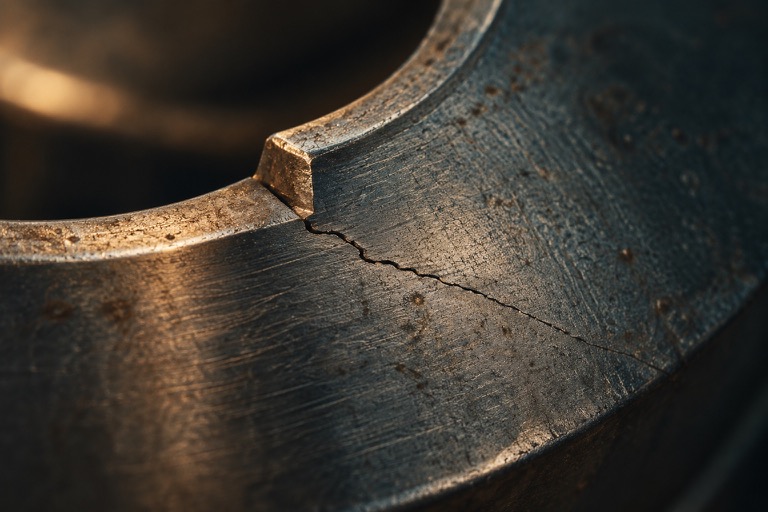 AI ILLUSTRATION
Crack
What does a single crack image fail to establish?
Read the explanation
Repeated loading and examination of the particular object matter for fatigue. Crack shape alone cannot replace them.
Read the story and its sources →Everything runs in your browser. Your inputs are neither stored nor transmitted.
An artistic rust texture, not a materials analysis, documented time series or condition inspection. The reaction diagram explains a principle without measurements or experimental instructions.
Royal Society of Chemistry · What causes iron to rust? ↗
Public introduction to a classroom investigation comparing iron nails under wet, dry, air-free and salty conditions. Full teaching content requires registration; no access to it and no reproduction of its procedures or results.
OpenStax Chemistry 2e · 17.6 Corrosion ↗
Open university textbook from OpenStax/Rice University. Explains electrochemical iron corrosion involving water and oxygen, hydrated corrosion products and the limitations of rust as protection. No calculation for a particular component.
Canadian Conservation Institute · Recognizing Active Corrosion, CCI Notes 9/1 ↗
Government conservation guidance, revised 2007; webpage modified 22 February 2019. Iron section distinguishes compact stable surfaces from active corrosion, loose products and other signs of change. Not a method for diagnosing an object from a picture.
Sources checked on 24 October 2026. RSC’s introduction is publicly visible; reaction explanations rely on OpenStax, and distinctions between conditions on CCI.