An old document still sits on a storage device. Its name is readable and its size looks plausible. Yet the familiar application no longer opens it. Between being present and being usable lies a history of formats, software and knowledge. Digital objects therefore change even when we try to preserve their stored sequences unchanged. The environment needed to understand them does not stand still.
Presence answers only the first question
A file is initially a stored sequence of data. To become readable text, an image or a playable work, software must be able to interpret it. The Library of Congress therefore considers both content and technical requirements when evaluating formats. Our hypothetical old document is not a documented case of data loss. It illustrates why successfully copying a filename does not, by itself, establish the continuing usability of the material it identifies. [1]
A format needs an understandable description
The library identifies accessible, complete format documentation as an important preservation factor. Knowing how information is encoded improves the prospects of reading it again later. A standardised name alone cannot replace documentation. Nor is a simple distinction between open and proprietary sufficient. For a particular format, what matters is which verifiable descriptions and tools actually exist and whether they adequately explain the properties that need to be preserved for future users. [1]
Adoption can make a difference too
A widely used format is more likely to have support from several tools. The Library of Congress treats adoption as a factor that can improve prospects for future access. This does not promise perpetual survival. A familiar format can change or reproduce important properties only in particular software. The practical question remains which content and functions need to survive, rather than whether a recognised format name appears at the end of a file. [1]
Three questions for the same file.
A preservation thinking tool, not an automated file test.
- Connection
Retain
Are the data still present?
- Connection
Open
Can a tool interpret them? [1]
- Connection
Understand
Can origins and significant properties be understood? [1]
Success on one level does not guarantee success on the others. [1] [2]
A file may depend on an environment
Fonts, external data, particular operating systems or special input devices can be prerequisites for use. The library explicitly includes such external dependencies in its analysis. An interactive work cannot always be treated like a single photograph. Preserving only part of its environment may leave something visible while other functions disappear. A vanished website can likewise lose more than its homepage, including internal connections and incorporated material that once helped its visitors understand the whole. [1]
Copying matters, but answers another question
An additional copy can help protect against the loss of a single storage device. It cannot by itself establish whether a format will remain understandable. The two tasks complement each other: retaining data and enabling their use. This distinction explains why archives do more than store objects. The Library of Congress introduction describes format knowledge as part of planning that keeps content manageable throughout its life cycle, including future technical changes and preservation decisions. [2]
Conversion can preserve and change
Migration transfers content into another technical representation. Emulation instead attempts to reproduce a previous execution environment. The Library of Congress mentions both strategies and hybrid approaches. Neither automatically answers every question about the original. Readability and order may be central to a document, while behaviour and controls also matter to a game. What counts as successful preservation therefore depends partly on identifying significant properties before making a change, and checking them afterwards. [1]
Context turns data into a memory
Metadata can record when something was created, which software was involved and which changes were subsequently made. The library describes self-documentation as a resource for preservation and interpretation. Even a family photograph becomes more understandable with names and an occasion. Archival work adds technical information and documented interventions. Context is not merely decoration: it can later distinguish a usable memory from a file whose meaning has become difficult to recover despite the continued presence of its data. [1]
The next version needs a trace back
For personal memories, a closer look can begin with a small inventory: which files matter, which can actually be opened, and what is known about their origins? This is an observation task, not a universal archival plan. Our repair story asks how an object can remain in use. Here the related question is what knowledge must travel with a digital object so that it remains understandable when its surroundings have changed.
Change has many clocks
A second or a million years: the time window changes what we perceive. Explore the scale and open related stories. Examples are observation windows and documented intervals, not universal process durations.
Whole scale: 1 second to 10 million years.
One second
An imagined short observation window: a wave belongs to continuing movement. Not a fixed wave duration.
Read the story →One day
A chosen interval between two notes. Visible difference and cause remain separate questions.
Read the story →Twelve weeks
Duration of the investigation in our habits story. Not a deadline for forming every habit.
Read the story →1984 → 2009
About 24 years between the Las Vegas images. Both exact dates are provided in the comparison.
Read the story →Roughly three decades
Object-specific example: the Statue of Liberty’s green patina. Not a universal clock for copper.
Read the story →One million years
An imagined geological observation window, not a measured weathering time for a rock.
Read the story →None of our examples fall within this window. Move or widen the window.
Logarithmic scale: equal distances represent equal duration ratios, not equal added years. For plotting, years are simplified to 365.25 days. The linked stories explain their sources.
Everything runs in your browser. Your inputs are neither stored nor transmitted.
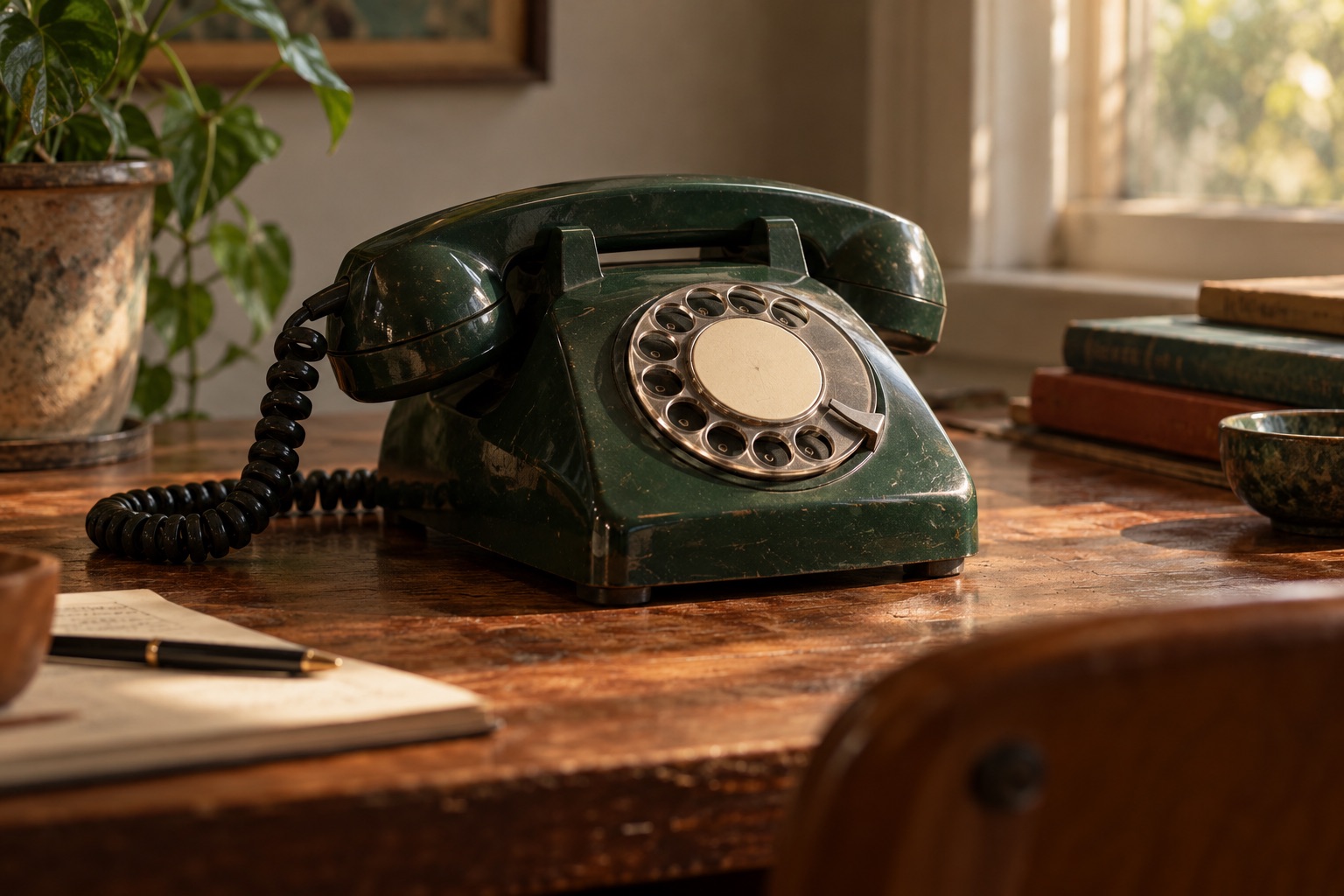
Artistic AI illustration used as a thematic motif, not a documented sample or photograph of the case discussed.
Library of Congress · Sustainability Factors ↗
Factors affecting long-term format usability: documentation, adoption, transparency, metadata and dependencies. No promise that a particular format will survive indefinitely.
Library of Congress · Introduction to Digital Formats ↗
Explains the technical format descriptions and their role in preservation planning. Both sources come from the same institution and are not independent studies.
Sources checked on 25 October 2026. Comments explain the role and limits of each source.